andrejsala.lv
Start
 
Development Opportunities Culture Living JAU
CalendarEvent OverviewInterviewsMuseumsVideo
About Us  MapLV/EN/RU
Archives
Discussion Held on Future Latvian Museum of Contemporary Art

Is it going to be a national or pan-Baltic institution? Do we need to procure gilded picture frames and employ museum guides? How about following the technological revolution and providing interactivity to visitors, who could then select and interpret the exhibits on their own? What means are available for involving the audience even more to become a public space and a platform for discussions? Could Rīga become famous for its Museum of Contemporary Art (LMCA), a leading one in the Baltics?


These were some of the topic areas, along with more general trends in modern art and exhibiting practices, that were discussed during the October 12, 2007, conference, organised in Andrejsala by the Latvian Ministry of Culture and uniting domestic and foreign art experts, architects, curators and artists.


Among the presenters discussing the transformational and social role of museums was Maaretta Jaukkuri, curator at the Finland's Kiasma contemporary art museum and member of the International advisory panel of the LMCA. She emphasised that a museum is important not just because of its collection but also due to practical arts activity and stimulating effect on public discourse. "The museum ought to become a new public space where critical voices and discussions can find expression. But the question is, how do you turn a particular location into a public space," Jaukkuri remarked.


On the topic of how arts transform in the sometimes paradoxical context of globalisation, the curator mentioned as positive the fact that artists are increasingly more interested in social issues and that they are able to render them visually and enkindle debate; as a result, policy makers too pay more attention to arts as one of the sectors at society's service. At the same time, Jaukkuri is concerned that the political vested interests may pose a certain threat to the artists' sovereignty: "It is very important to make the political and economic powers-that-be understand that society needs access to contemporary art. The liberty and autonomy of artists must also be carefully protected. A museum is not expected to become a social agency but it has to address social issues."


In Jaukkuri's opinion, the ongoing process of selecting and creating the LMCA collection has been very successful, however she also remarked that it is necessary to listen in also to the finest vibrations that happen to exist in the local society and in the views expressed by various people. "Postmodernism has brought about some interesting questions: what's aesthetics and beauty and even what's art. Such discourse brings us to a realisation that the only thing that can be defined in the modern art milieu is the applicable method. But not the result – because 'result', as an objective entity, does not exist in contemporary art," concluded Jaukkuri. 


Assisting with comprehension more important than collections


Raitis Šmits, a representative of the Rixc new media centre and member of the International advisory panel of the LMCA, picked up some of the relativity aspects in the defining of modern art in his presentation, which focused on net-art: "What criteria exist for defining what's net-art? How can you talk about a result in a process-based artwork, if it in fact possesses neither result nor any object that might be pointed out as the finished piece? Maybe it's the method used for creating the artwork?" Net-art, in a way similar to its sister disciplines of photo and video, arose along with the new technology, the internet, and the internet is also the only medium in which net-artists can create. The known qualities of net-art allow it to boldly challenge the conventional wisdoms regarding the essence of art and chart the relativistic nature of contemporary art. To begin with, net-art is egalitarian because very often the creator is not an artist but perhaps a teenager or a professional computer programmer. Also the duality of the original and its copies has vanished because the two are now identical; only the URL, pointing at its location on the web, makes the original as if different from its clones. Finally, net-art pieces are never stored in an attic by the artist and never wait for an exhibition to happen; they are self-organising, always publicly accessible and the exposition medium is the ubiquitous web. Therefore, net-art stands in a direct contradiction with the existing concept of the museum as an institution that procures artwork in order to save and preserve it.


The LMCA debate was continued in the speech of the world-renowned art consultant, German gallerist Norbert Weber: "Purchasing and storing up is not that important; what's important is the ability to handle art and to help with comprehending modern art. Andrejsala already has assumed a very correct approach. Perhaps an "everlasting" collection is not even needed; you may purchase items for a certain period of time and expose public to these exhibitions and expressions of modern art. Why not, right now, open Raitis Šmits and Rixc's net-art server to the broader public and show what's really net-art?"


Leonid Bazhanov, a representative of the Russian National Centre of Contemporary Art, put forward some aspects of exhibition practices: "To me, when thinking about the LMCA, the most important questions would be how to exhibit contemporary art and what forms of artwork would create a communication with the viewers. Does the old, soviet-era standard of using gilded picture frames and a guide eager to explain the essence and values of the art pieces still apply? Or, is another, digital approach needed here, which would allow the public to freely engage in interpreting the artwork?"


50 thousand bottles to choose from


Peter Weibel, the director of the Karlsruhe art and media centre, elaborated on the requirements posed by the modern age of technology to the area of museums: "I am interested in the development of the relations between a museum and its audience. We live in an epoch of mass culture, therefore the people's attitudes toward the museum are crucial; the consumer must feel emancipated when at the museum. Karlsruhe, with its museum, is still a small town and doesn't attract a lot of tourists. Our clientele is fairly distinct and unchangeable, therefore we have purposefully created our contemporary art museum in such a way that would make the local residents return there again and again. The modern people have grown used to high technology, the vast informational space of the internet and the ability to scan and screen it according to various criteria. Because of that, a museum nowadays has to be as interactive as are the modern media; it should be as programmable and selectable in terms of finding information."


Weibel also presented several expositions of the Karlsruhe museum, in which visitors have the possibility to get involved in the processes of creating, nurturing and exhibiting. For example, you can take a photograph of yourself and then see it exhibited on a museum wall; or, in the 3D technology hall, use a simple remote control to virtually travel to interesting places around the planet: to the summits of the Alps, to the Pantheon... It also allows re-programming the exposition of a collection of contemporary artwork and, by selecting, creating your own unique catalogue. A bar within the museum has 50 thousand bottles of drinks dated with different years and names, which are associated to the respective year in music or a particular performer so that the recordings can be played back to the visitor. The catch is actually the fact that the collection consists of obscure, even weird recordings whose names nowadays don't mean much for the most people. "By allowing visitors to programme the exposition we achieve a certain level of interactivity and mobility: you can as if time-travel in arts and scoop information from any location. The experience is personalised for each visitor," explained Peter Weibel.


Addressing the future needs


Returning to the topic of the LMCA, Raminta Jurėnaitė, art expert and professor at the Vilnius Academy of Art, remarked that the museum's collection has begun very well, especially because the works are purchased instead of requesting free donations from artists. That is not the case everywhere. "At the meetings of the advisory panel, we have been unanimous that the LMCA shouldn't be a single-medium museum. In my view, if it is created as a collection of only domestic artwork then it may lose its future potential. At the moment, a Warsaw museum is very ambitious about becoming the museum of the post-soviet countries, but I think that by including both domestic art and art from the neighbouring countries Rīga indeed has the potential to accommodate the most noted art museum in the entire Baltic Sea region.


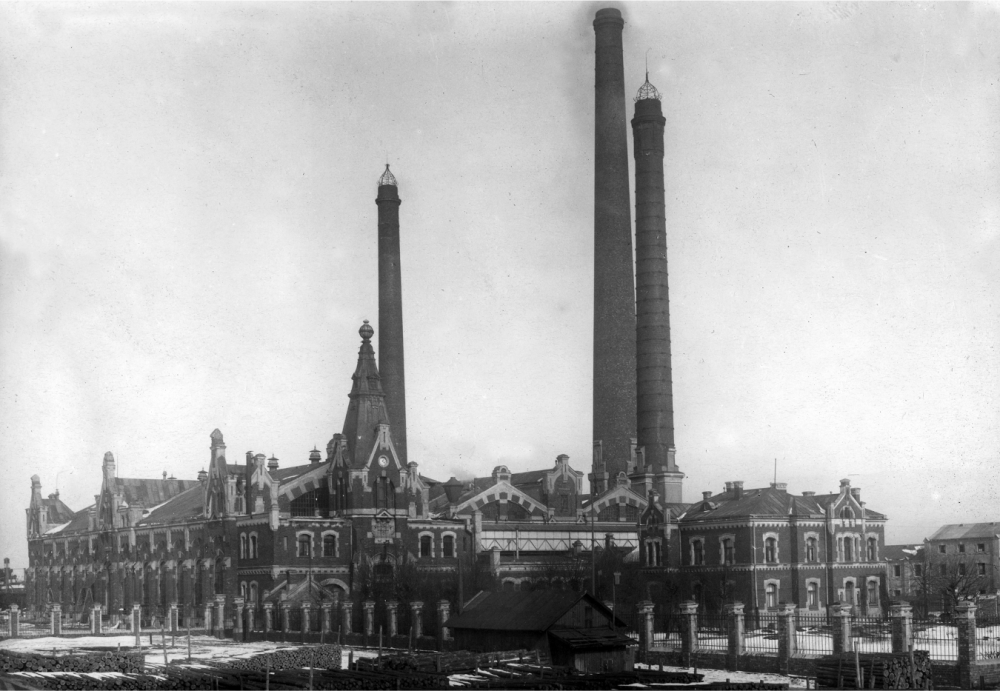
Reinier de Graaf, representing Office for Metropolitan Architecture led by Rem Koolhaas who has authored the proposed architectural design of the LMCA, delivered an impressive presentation addressing the current state of relationships between arts and market economy, which included vivid examples of how, during the evolution of market economy, art too has become a winning instrument for businesses. Museums, as we see them nowadays, are extraordinary and immense edifices that compete with one another in terms of size, cost and attendance statistics. De Graaf brought the conference's attention to the fact that the authors of the LMCA project have fortunately avoided such cliché grandeur, although Andrejsala does offer plenty of space for new, humongous and modern structures. As opposed to the worn-out approach of simply exhibiting modern artwork against a background of industrial heritage, the Andrejsala power station building is going to be as if preserved in a piece of amber, that is, enveloped in light and figuratively glassy peripheral buildings.


Mārtiņš Heimrāts, chair of the Latvian Artists Union, was similarly positive about the architectural choices made: "The involvement of Rem Koolhaas's architectural firm in the LMCA project ought to make us very proud. The key task will be to fill the building with staff – our curators, artists and critics – who for a long time have been scattered and lacking a clear leading light. When they get to work together in the new museum, it will be a major impulse in the entire development of the Latvian contemporary art.


It can be expected that the LMCA will be a multifunctional centre of arts and culture, a territory that's both public and democratic, in which one can learn about contemporary art, participate in activities, engage in workshops and bring up discussions – or maybe simply picnic in a creatively inspiring environment. Linards Kulless, an artist who has been among the Andrejsala arts activists for the last couple of years, concluded with the following: "A museum may, of course, be a wonderful building and office zone. What's essential is that the museum in Andrejsala has already been born. The new building will only have to extend the current set of activities."


« Return   |   Top   |   Print