andrejsala.lv
Start
 
Development Opportunities Culture Living JAU
CalendarEvent OverviewInterviewsMuseumsVideo
About Us  MapLV/EN/RU
Archives: Interviews
Andrejsala's Labyrinths of Arts and Regeneration

About two years ago, Andrejsala, a former port area with a number of soviet-built industrial facilities, opened its gates to a movement of artists. This has noticeably changed the territory's ambience and looks, while urban planners come up with increasingly clear visions of its future. To discuss the interplay of the arts world and the longer-term architectural intentions, we met with Valters Māziņš, chairman of the board of SIA Jaunrīgas attīstības uzņēmums, the Andrejsala development company.


In the near future, what is going to happen to the arts and entertainment scene in Andrejsala?

In the twenty-four months after Andrejsala stopped being a gated territory, we have seen it gradually become a true urban district and those most daring souls, who are not afraid of the sometimes-dizzying local vibe, come and inhabit it. The district's culture is just at its outset, as there's still many a mile to go before we'd reach what the city and its people would want it to be.

And it's three years since we began researching, gathering information and discussing with architects, the municipality, the culture authorities and creatives from across Europe, regarding the best possible ways to integrate our territory within the fabric of the entire capital, because it's located right next to the historic centre of Rīga. It is understood that the project can enjoy a long-term success – or any success at all – only if it involves the development of a high-quality public space.


Would the term gentrification* apply to the processes currently observable in Andrejsala?

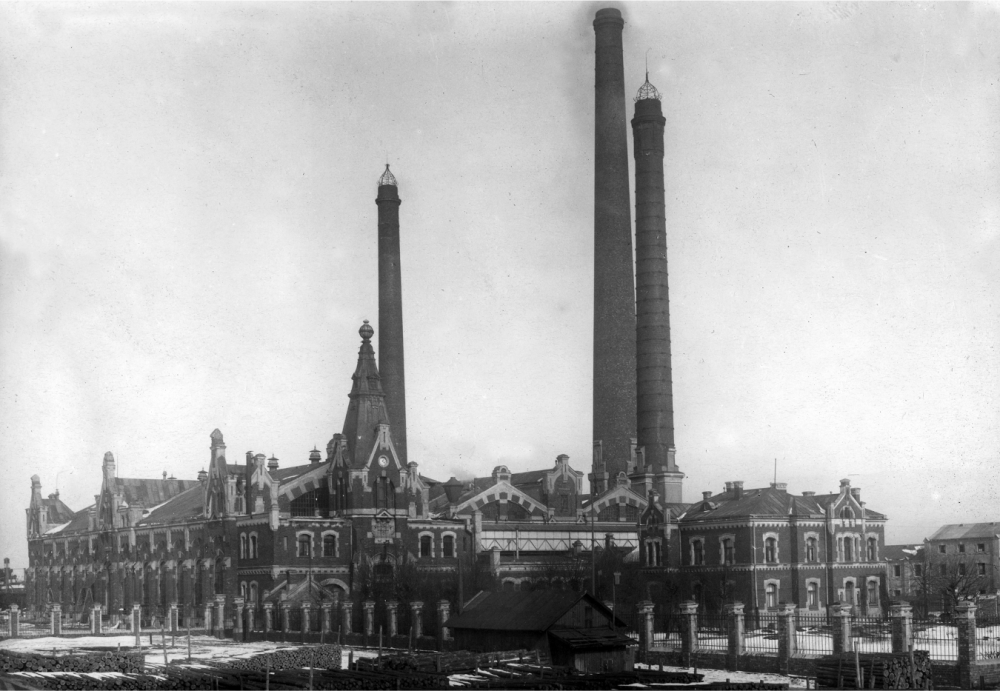
I don't think so because Andrejsala in fact doesn't have a strictly urban past. Ever since its birth and up to recent past, it has been used in navigation and power generation business. It would be more correct to say that we're involved with the regeneration** of a degraded territory rather than gentrification.


Will Andrejsala's urban environment develop on its own, or should it be created by means of a planned effort?

It is a globally topical discussion on how to best organise public space: do you allow the processes to take care of themselves; do you finance, support or otherwise take control of them. In my view, if you endorse an activity, you have to keep tabs on how it impacts the existing surroundings and the groupings of artists and activists. I believe there can be a balance between establishing good quality urban environment and the creative projects, while avoiding being unnecessarily controlling of the latter.

When considering Andrejsala's current status and the impending transformations, it seems logical that the future environment will largely depend on the eventual success of the developer in achieving the goals set by the land use planning and architectural blueprints; in other words, the good intentions and ideas will have to materialise accordingly.


Undeniably, the urban integration of Andrejsala has been advanced by the arts activity involving a fairly sizeable community of artists and project groupings.

Yes, this cooperation has helped to spread the word about Andrejsala: we have rented out the vacant and disused local premises upon a certain agreement with the arts activists.

I'm very appreciative of the artists who showed up two years ago saying, "we want to be here and work on our ideas and projects, hoping to capture the interest of public". Although it was clear that it's a limited-time offer, we decided to not just let in artists but also welcome everyone else by removing the fences and investing some money in tidying up the outdoor space. For the artists, it was an unseen opportunity in this city: an independent and alternative venue of arts. So, this was the agreement that the both parties had struck.


Possibly the artists have developed new aspirations, which makes them look differently at the existing lease. What if, having the feeling of a new kind of maturity, the artists decide to pull out of Andrejsala?      

Here in Andrejsala, it was the first such location in Rīga where creatives were offered to rent premises at 1 lat per month: the old buildings of an industrial site opened to them so that they could begin working on their projects. But – this is not the only one degraded and disused territory in the city.

We've noted that, for some of the arts activists, the initial euphoria about the austere facilities in an alternative environment has died down and that there's new demand for better workspace. There are artists who have grown professionally, and now they start considering moving their activities elsewhere – for example, they're interested in serious international partnerships, in more extensive networking across the arts circles as well as in providing more comfort and ease for their visitors and party guests.


Valters Māziņš (right) conversing with Linards Kulless, the originator of the Singalong artists residence, during Andrejdiena in 2007.

As you say, the artists willing to settle here had minimal, if any, requirements.  Has that changed now? Is there a new emphasis on quality?

From the very beginning, we've supported the creation of an open public space and a dialogue with the artists. Possibly the two parties initially had differing visions on how the premises should be used and jointly refurbished.

The Andrejsala activities ought to address and attract lots of Rigans, not just the alternative crowd. It should be taken into account that the district's area is actually quite large and will later provide housing for up to 14,000 people. Arts and entertainment projects need a well-maintained environment, therefore we're open to cooperation with artists' alliances that cannot turn a profit – they're already based in Andrejsala – and with production companies willing to use it on a per-event basis.

Admittedly, not all of the arts projects to date have shown that they're successful and lasting. There can be a period in which you come up with atypical, even slightly shocking or insufficiently planned events; however, if you repeatedly failed to enchant the public, you'd have to ask yourself whether it's been worthy. Mere self-expression in the name of furthering your own interests usually falls short of contributing to enhancing the public space.


In your opinion, what would be an ideal form of cooperation?

It's very basic: we contribute space, and the artists have a project. There should of course be some shared or at least similar vision between the two parties, the property developer and the artists.

We've started a discussion with our artists in residence on a number of practical matters because we want to hear them out. Recently, there was also a survey attempting to find out about their future visions of Andrejsala. The artists seem to agree that there should be an 'arts hub' here, possibly acting as a catalyst of creativity in a culturally diverse environment, attracting high-quality events and fostering the materialisation of prominent aesthetic projects. Thus the quality aspect is indeed relevant. We're serious about avoiding a situation when the activities of some members of the younger generation would go over the top and perhaps even damage the atmosphere and the good name of Andrejsala.


The arts buzz in Andrejsala has spurred both critics and supporters. Has their attention benefited Andrejsala?

Our district, by means of organising arts and entertainment festivals, has secured for itself a place on the cultural map of Rīga. These events and processes are a trademark of Andrejsala. There has been noticeable growth over these past two years, with regular events, which are announced on our news website andrejsala.lv. Andrejsala has been discovered by many as the place in Rīga that houses the Museum of Naïve Art, the Power Generation Museum and the biggest photographic studio in the Baltics; a place where you can relax, take a walk along the Daugava or jog. During this summer's Water Festival, it was amazing to note how many Rigans of all ages were eager to explore every corner of the territory. And still, for most people of the city, Andrejsala remains "the big unknown".


Do you often like to come to Andrejsala's events?

Life is hectic and I may lack time for being present at each and every event. But whenever there's a prominent one, I do my best to attend it.

Among Andrejsala's events, there count several citywide projects as well as more local ones organised by specific groups. A lot of examples could be mentioned: the White Night festival of arts, the Museum Night, the pilot festival of movement theatre during the year 2006 Andrejdiena, as well as a number of art exhibitions.    

Were they all equally interesting? Perhaps not, but each of us has their personal taste and preference. The offer should, however, be varied enough to cater to everyone's needs and wants.


Andrejsala's total area is 38 hectares, but only a fraction of it is leased to artists. What happens in the remaining part?

Since the south part of Andrejsala is where the regular arts events take place, it obviously acquires most of the publicity; yet there are a lot of various operations going on elsewhere within the territory.

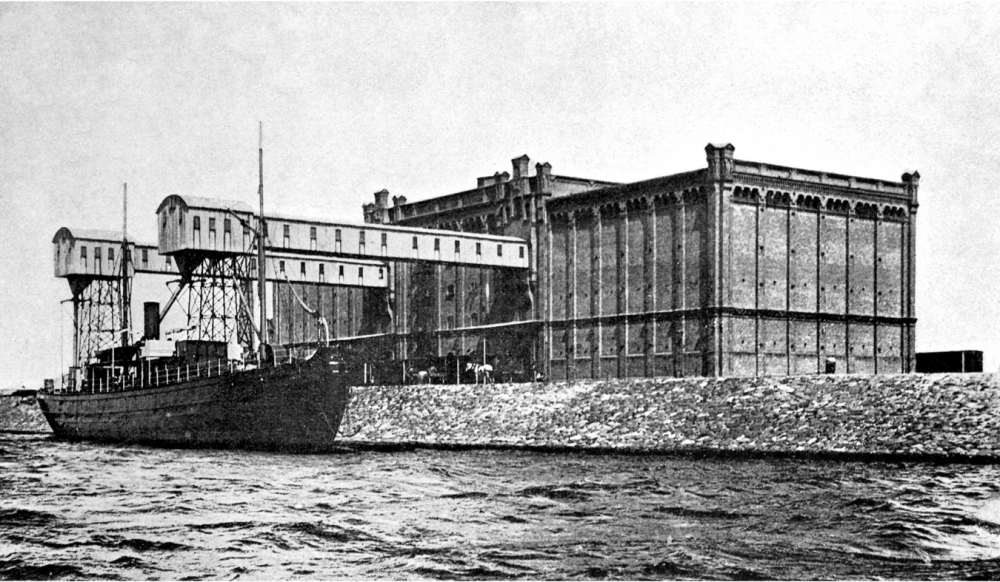
During the tourist season, Andrejsala's harbour received several cruise ships, which will resume next year as well. Last summer, we also opened a new marina for yachts in the north part. Nearby, there's the Rīga Port Silo still handling grain. The entire length of Andrejostas Street is now open, connecting the south and north parts; there are renovation works at the North End's embankment; two buildings house offices; the Krasta railway station continues operating and handling cargo, and so on.


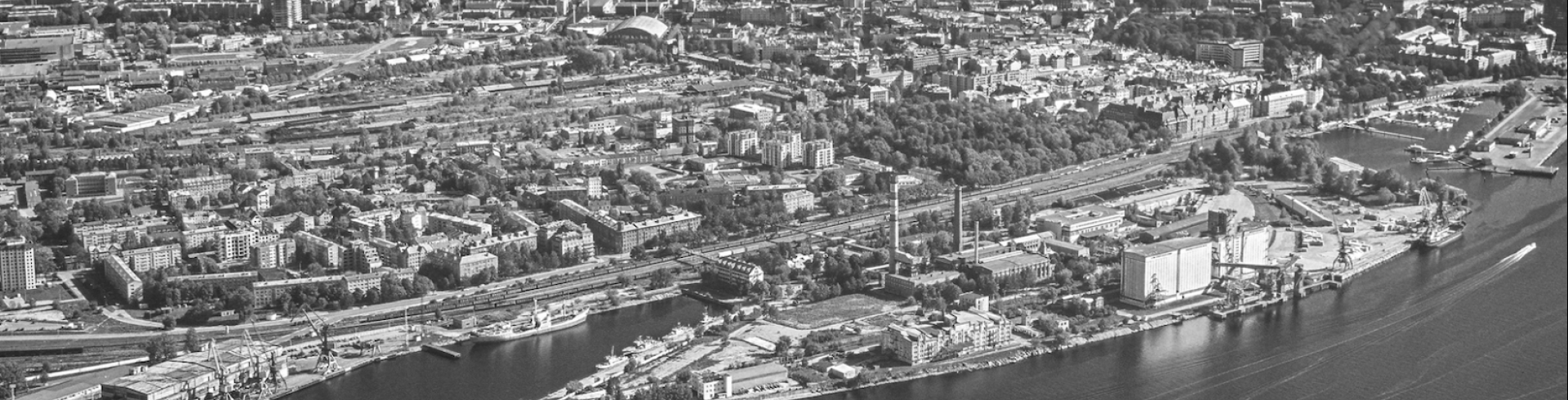
Andrejsala, bird's-eye view in autumn of 2006.

What plans are there for Andrejsala in 2008?

To date, our work on setting up more definite blueprints and schedules has been somewhat delayed by the need to agree on the detailed master plan. Once it's ready, we'll start making decisions upon the further use and the nearest transformations of the territory. And we'll be able to respond in a more exact manner to the artists' questions regarding the future of the South End's arts activity.

In fact, the development of Andrejsala is just at its beginning, therefore there will certainly be a lot more debate on the role of arts and culture, on the ways that they can influence the standard of living as well as whether we will indeed embark on instituting here the Museum of Contemporary Art, a library and an institution of higher education.


___


* "Gentrification" denotes a transformation of dilapidated urban areas into exclusive properties, during which the changes affect not only the appearance of the urban space but also the social environment.


** According to a Rīga City Council's City Development Department's project document pertaining to the economic regeneration of degraded areas, such areas include locations that, in order to become usable again, need intervention because they have been polluted by prior industrial use, are currently abandoned or have a secondary use or partial use, or have buildings whose construction may not be completed viably. Degraded areas, especially if they are clustered in one specific district of a city, may have a negative impact on the adjacent areas and stifle sustainable and integral development of the city and its community.


« Return   |   Top   |   Print